
Save water in the heart of the home
Ten percent of household water is used in the kitchen for cooking, cleaning, washing or drinking.
Quick tips
- Install flow-controlled aerators for taps. They’re inexpensive and can reduce water flow by 50%.
- Wash your vegetables in a bowl or container, and water your plants with what you collect.
- Defrost frozen food in the fridge or microwave, rather than placing it under running water.
- Use a plugged sink or a pan of water when working at the sink to avoid running the tap continuously.
- Use just enough water and keep a lid on it when boiling vegetables. The water will reach boiling point quicker.
Waiting on hot or cold water?
- Fill a jug and keep it in the fridge so you don’t have to wait for tap water to run cold.
- Catch running water while waiting for it to warm up. Use it to water plants, rinse dishes, or wash fruit and vegetables.
- Insulate hot water pipes so you don’t wait as long for the hot water to reach the tap.
- Set your hot water system thermostat at no more than 60 degrees, so you don’t have to add water to cool down very hot water.
Handwashing dishes?
- Use a bucket or sink plug instead of running tap water. If you have 2 sinks, fill the second one with rinsing water. If you have only one sink, stack washed dishes in a dish rack and rinse them with a pan of water.
- Use dishwashing liquid sparingly, this will reduce the amount of rinsing required.
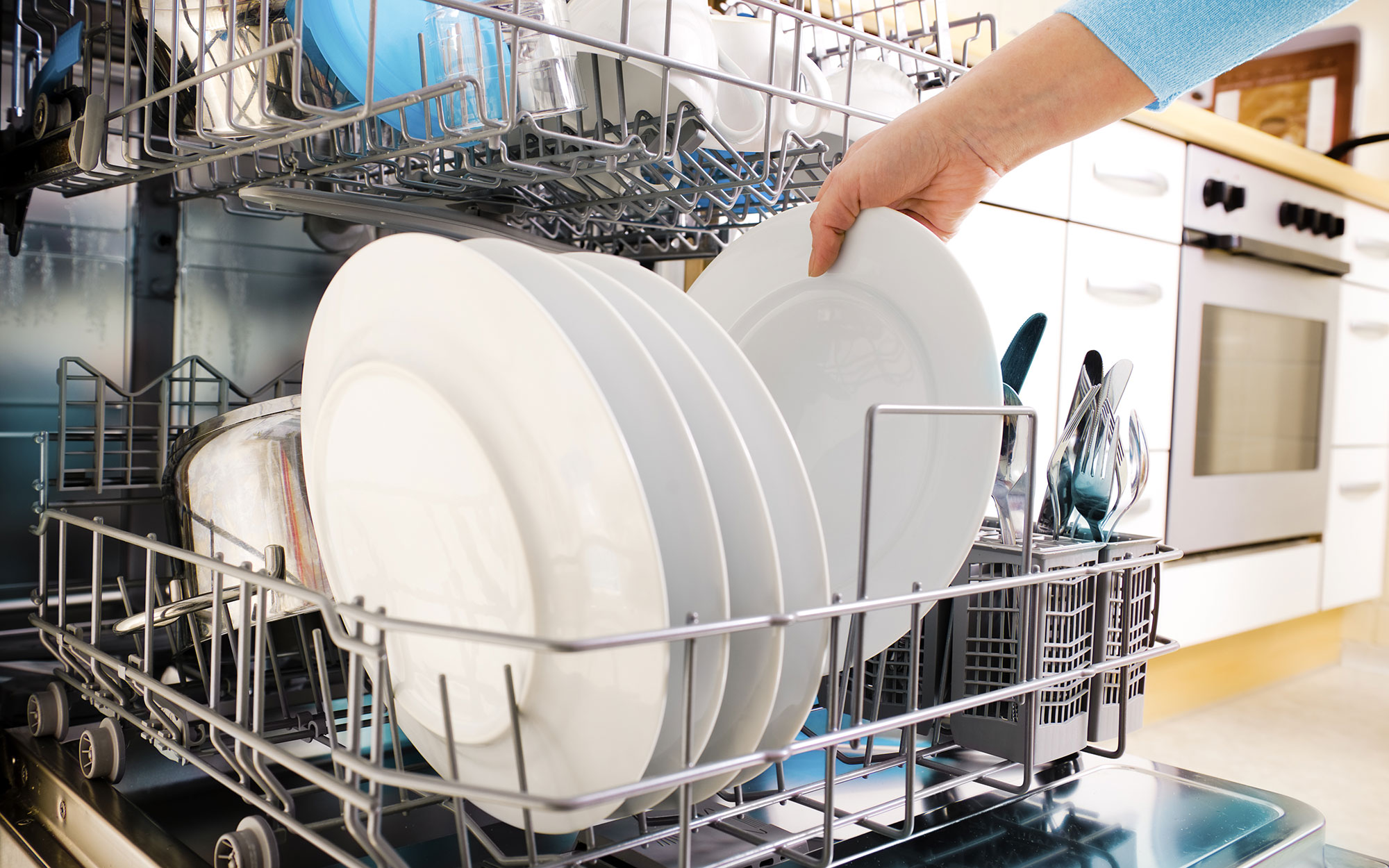
Using a dishwasher?
- Choose a more water efficient dishwasher. A modern 6-star WELS rated efficient dishwasher is usually more water efficient than washing by hand.
- Forget the pre-rinse, the dishwater does it for you. scrape your dishes before loading them into the dishwasher.
- Use the rinse-hold setting on the dishwasher, if it has one, rather than rinsing dishes under the tap.
- Make sure the dishwasher is full before turning it on.
Dishwasher or handwashing
- A dishwasher is more water-efficient than washing by hand when you have a full load.
- A full dishwasher uses about 13 litres of water to clean 144 items. Washing the same load by hand uses about 100 litres of water on average, according to a study by the University of Bonn in Germany.
- According to Choice magazine, a typical Australian sink uses 15-45 litres of water. Consider how often you change the dirty water. Twice, three times? Also, do you rinse? Are you running the tap or filling 2 sinks rather than one?
- Hand washing makes sense if you only have a few dirty dishes and it’s not practical to wait for a fully loaded dishwasher. Like the dishwasher, let the dishes pile up and wash them all at once. Doing dishes several times a day will use more water.