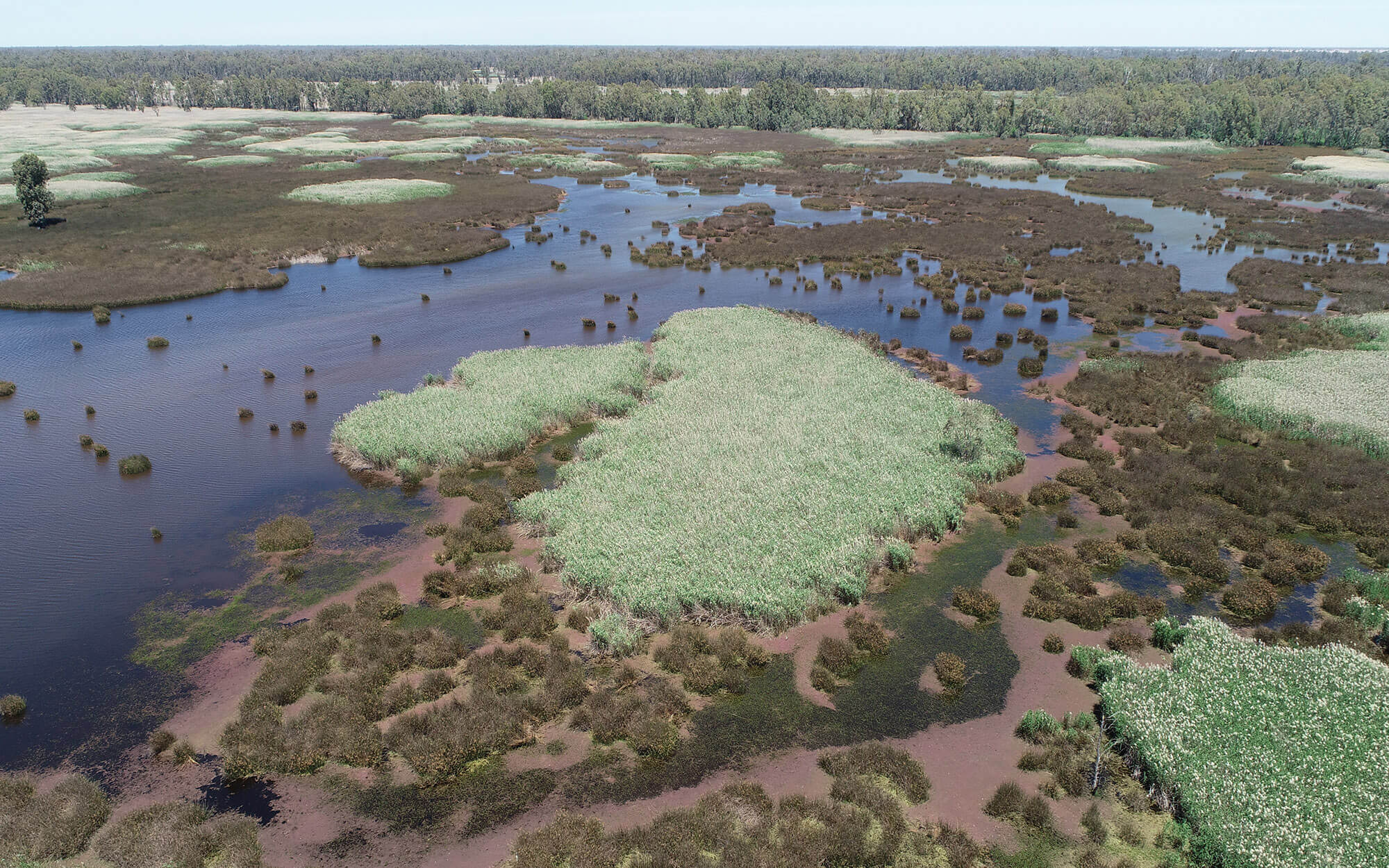
About the Murray-Darling Basin
The Murray-Darling Basin is a system of interconnected rivers and lakes covering most of inland NSW, extending from Queensland to South Australia. It is the twentieth largest river catchment in the world. It covers more than a million square kilometres and contains 22 major catchments.
The sharing of water between all users in the Basin, including the environment, is important both nationally and for the more than 2.3 million people that live there, including people from over 50 different First Nations.
The Basin is also home to 16 internationally significant wetlands, 35 endangered species and 120 waterbird species.
The Basin in managed together by the Australian Government and the respective State Governments of NSW, Queensland, Victoria, South Australia and the Australian Capital Territory.
Murray-Darling Basin Plan
The Murray-Darling Basin Plan (the Basin Plan) was developed as a requirement of the Commonwealth Water Act 2007.
It sets the amount of water that can be taken from the Basin each year, while leaving enough for our rivers, lakes and wetlands and the plants and animals that depend on them. This amount is called the Sustainable Diversion Limit (SDL).
Murray-Darling Basin Authority
The Murray-Darling Basin Authority (MDBA) is an independent statutory agency in the Australian Government. The MDBA is responsible for planning the Basin's water resources as a whole and working with Basin states, industries and communities to manage the Basin’s water resources.
Find out more at the Murray Darling Basin Authority website.
NSW position on Murray-Darling Basin matters
The MDBA is undertaking its first 10 yearly review of the Basin Plan in 2026. The MDBA released a Discussion Paper in early 2026 and invited submissions to shape the development of recommendations on how the Basin Plan and Basin water management can be improved.
Read the NSW Government submission to the Basin Plan Review 2026.
Read the NSW vision for future Basin Plan implementation. This builds on our submission to the Basin Plan Review and the NSW Alternatives to Buybacks Plan which was released in February 2024.
Sustainable Diversion Limit Adjustment Mechanism (SDLAM)
The Sustainable Diversion Limit Adjustment Mechanism (SDLAM) is a Murray-Darling Basin Plan program designed to allow environmental outcomes for rivers, wetlands and wildlife to be achieved using less water. It consists of supply, constraints and efficiency measure projects.
In 2017, the Basin states and the Australian Government agreed on a package of 36 supply and constraints projects across the southern-connected Murray-Darling Basin. This package of work aims to recover 605 GL of water each year for the river system.
The NSW Government was the lead or co-proponent for the delivery of 22 of the 36 SDLAM projects but has since withdrawn one project and in 2025, Basin Governments agreed to notify two new NSW-led SDLAM projects.
As of 30 June 2026, as per Basin Plan requirements, the Basin Officials Committee (BOC) agreed to amendments or withdrawals of SDLAM projects to reflect projects that will be in operation by 31 December 2026.
NSW has already completed 9 SDLAM projects and is making significant progress to deliver our remaining projects by the end of 2026, in collaboration with local communities, key stakeholders and other Basin states, with funding from the Australian Government for infrastructure works.
The final decision of the BOC with regards to projects in operation, those amended and in progress and those withdrawn is available on the Murray-Darling Basin Authority website.
Our current supply projects
Supply projects are improved ways to manage the Murray-Darling Basin’s rivers to more efficiently deliver water for the environment. Projects include environmental works such as building or improving river or water management infrastructure or changes to operating rules.

The SDLAM Acceleration Program brings forward over $446 million worth of investment in regional infrastructure to help implement the Basin Plan. The Acceleration Program aims to deliver three SDLAM projects and two key components of one SDLAM project to deliver up to 45 GL of the 605 GL SDLAM target. Find out more.

The Australian and NSW Governments are working in partnership with Murray Irrigation Limited (MIL) to deliver the Restoring Murray Waterways Project, helping to restore and reconnect rivers, wetlands and floodplains across the Edward/Kolety-Wakool system.
The project is improving MIL’s gravity fed irrigation network to deliver water to areas typically receiving water only during times of high Murray River flows.
The project will be delivered as part of the NSW’s Government’s Sustainable Diversion Limit Adjustment Mechanism program.

The NSW Government worked with communities to investigate opportunities to deliver improved environmental, cultural and broader community outcomes under the Better Baaka program.
The package of initiatives included in the program require funding to progress.
While we are not currently proceeding with the Better Baaka program in its entirety at this time, we are committed to investigating future funding opportunities to deliver elements of the program supported by the community.

The NSW Government worked with communities to investigate opportunities to deliver improved environmental, cultural and broader community outcomes under the Better Bidgee program.
The package of initiatives included in the program require funding to progress.
While we are not currently proceeding with all elements of the Better Bidgee program at this time, we are committed to investigating future funding opportunities to deliver elements of the program supported by the community.
Our current constraints projects
Constraints projects aim to overcome some of the physical barriers that impact delivering water in the Murray-Darling Basin. Constraints projects can include changes to physical features such as crossings and bridges. They can also change river operating practices and rules.

The Reconnecting River Country Program is a key initiative under the Murray-Darling Basin Plan, designed to create healthier more resilient river systems in the Murray and Murrumbidgee valleys. This will ensure future generations can enjoy the benefits of thriving river systems and wetlands.
Find out more
Our current efficiency projects
Efficiency projects are activities that change water use practices and save water for the environment. Projects can include upgrading irrigation systems, lining water delivery channels or installing water meters, along with water productivity improvements in manufacturing or irrigated agriculture, or changes to urban water management practices to reduce water.
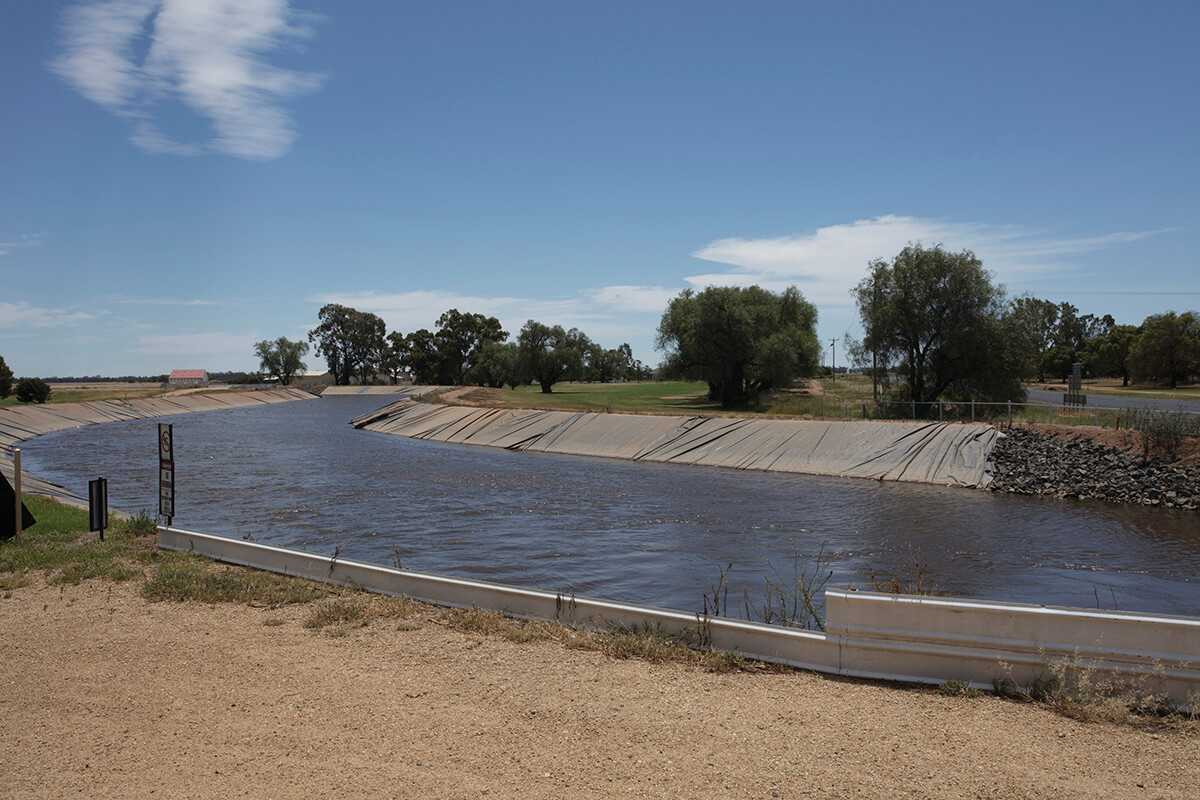
In January 2024, the Australian Government announced the Resilient Rivers Water Infrastructure Program, following the successful passage of the Water Amendment (Restoring Our Rivers) Bill 2023.
The Australian Government’s Resilient Rivers Water Infrastructure Program builds on and replaces the former Off-farm Efficiency Program and supports the delivery of the 450 GL of water recovery target under the Murray-Darling Basin Plan.
The program aims to provide Murray-Darling Basin state governments with a more flexible investment approach than previous efficiency measures programs.
Find out more
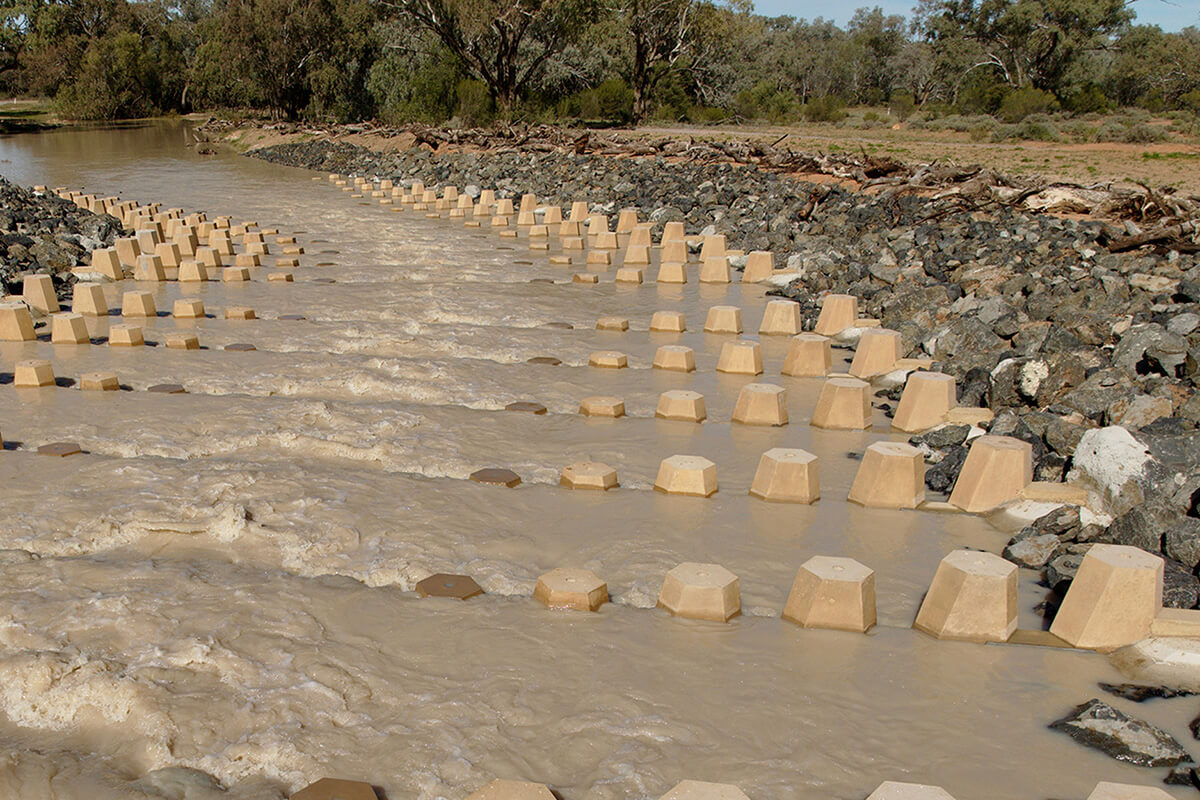
The Fish Passage: Reconnecting the Northern Basin project is one of the projects being delivered under the Northern Basin Toolkit. This project seeks to reinstate waterways to allow native fish to flourish, while at the same time balancing the needs of local water users.
The project involves the incorporation of partial width rock-ramp fishways at the existing weir sites at Banarway, Calmundi, Louth and Tilpa to improve fish passage.
The project would reinstate 506km of fish passage along the Barwon-Darling river system and 83km of fish passage along the Macintyre River.
Find out more
The MDBA website has information about other projects and programs also being delivered to sustainably manage the Basin.
Water resource plans
Under the Basin Plan, there are limits for the Basin as a whole, with additional limits for individual valleys and catchments, as to how much water can be taken from the system. To ensure these limits are not exceeded, NSW is required to develop 20 Water resource plans.
Find out about our Water resource plans and their current status